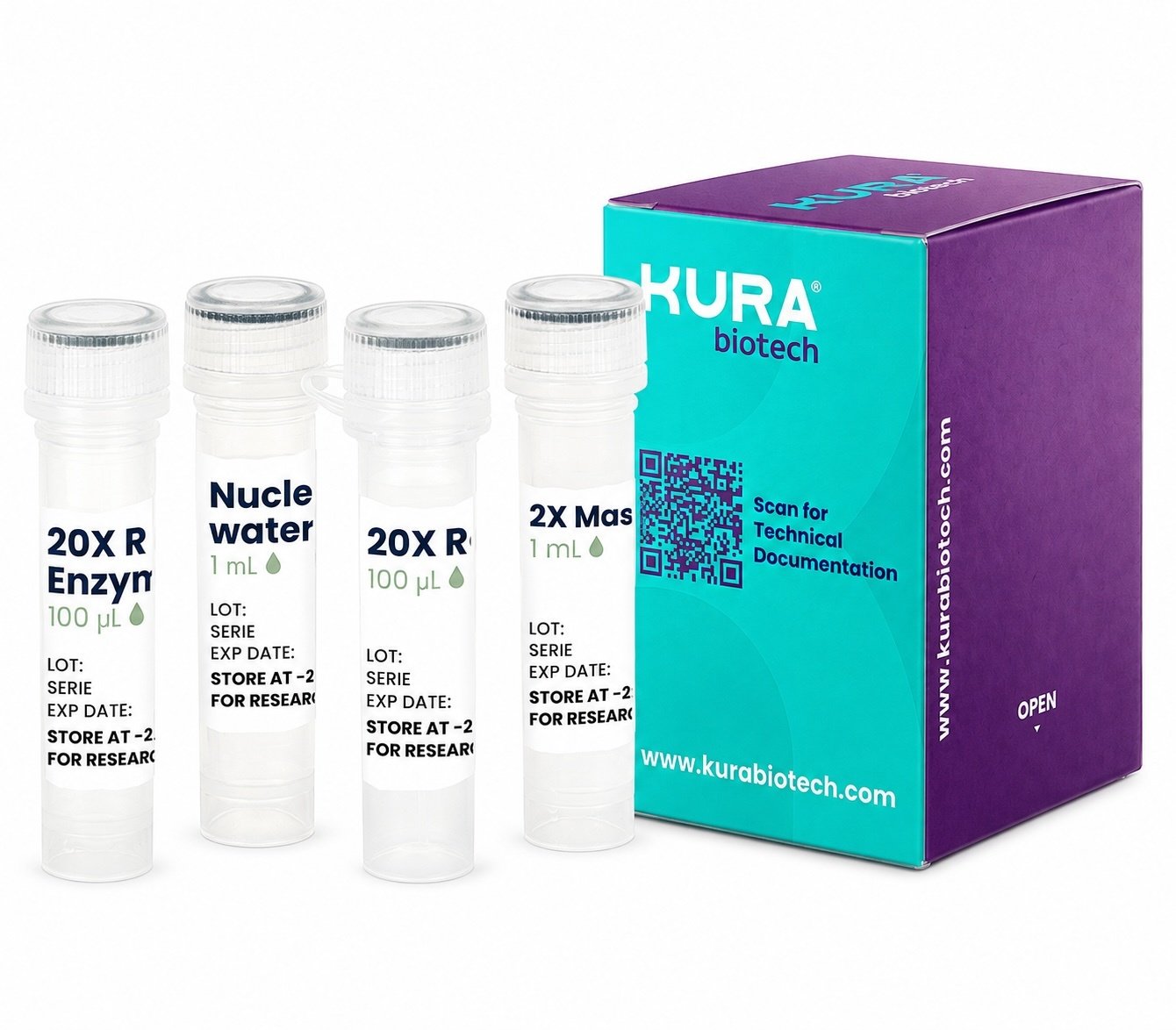
A sensitive, highly specific real-time RT-qPCR kit designed for rapid rapid reverse transcription and cDNA amplification across a wide range of template inputs in a single step.
Robust inhibitor tolerance in complex extracts
High qPCR efficiency across a wide range of RNA input and target types.
High Sensitivity for Low-Input RNA Samples
Format:One-Step RT-qPCR kit

Delivers efficient, sensitive, and linear quantification across highly variable target concentrations with demonstrated performance down to 0.1 pg.

Utilizes an aptamer-based hot-start mechanism to prevent non-specific amplification, guaranteeing distinct target signal clarity even past 45 cycles.

Maintains high enzymatic accuracy and reaction efficiency when processing challenging biological samples or complex extraction residues.
PERFORMANCE DATA
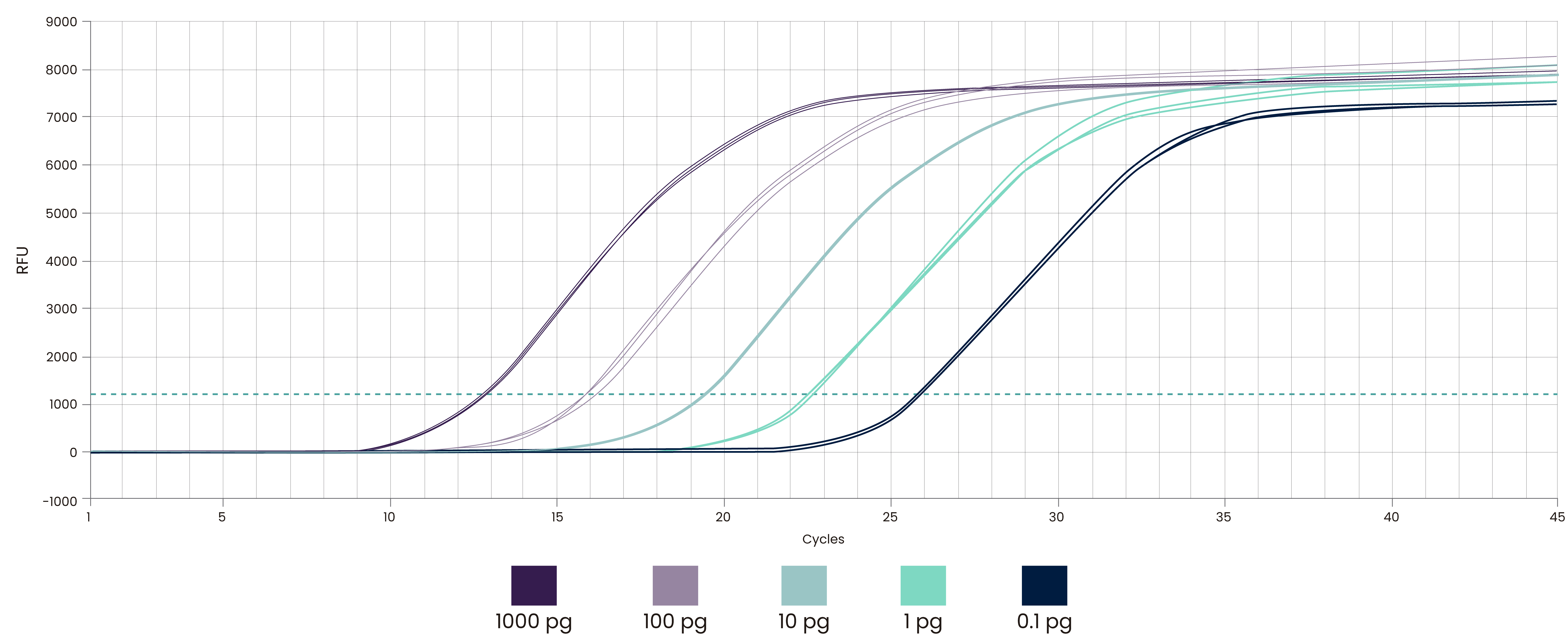
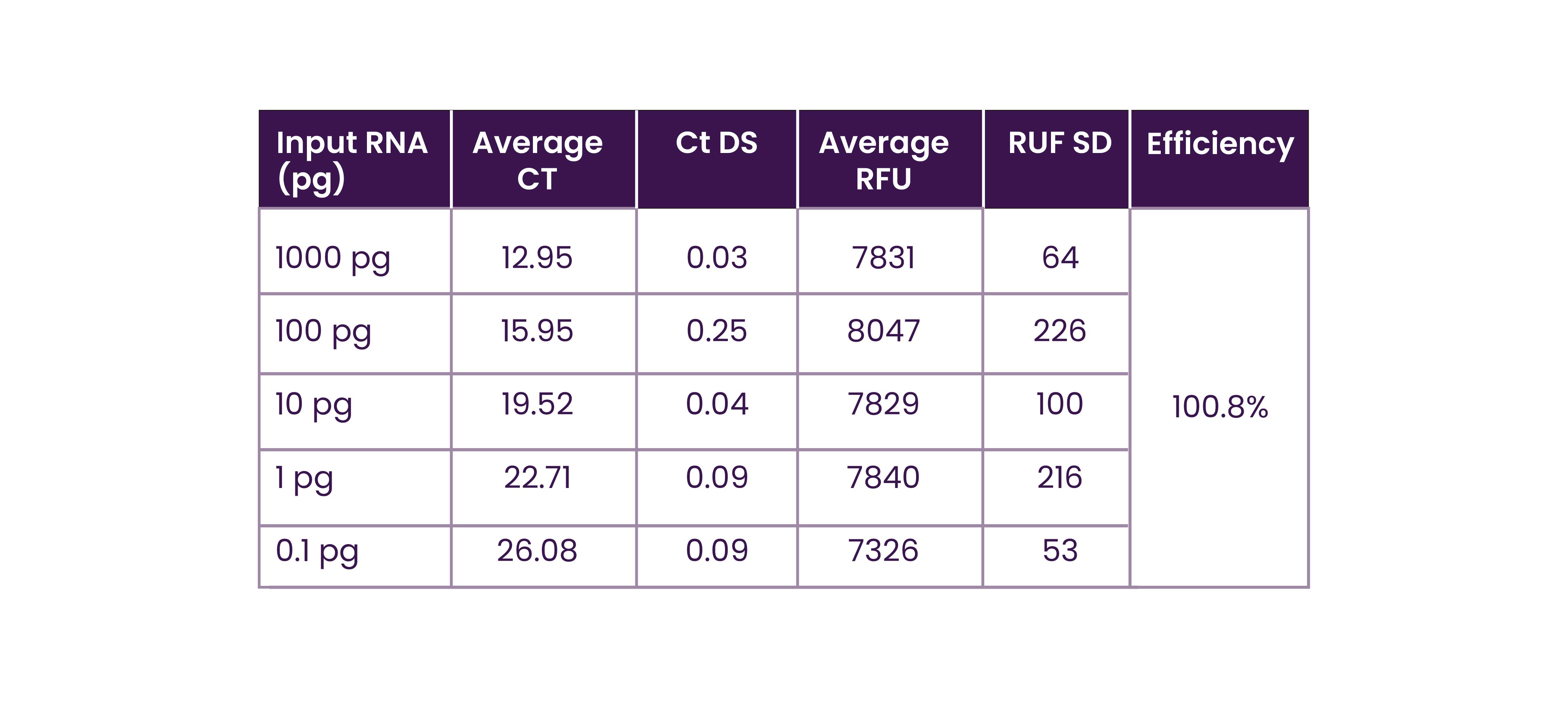
High amplification efficiency (100%) and reproducible performance across a broad range of RNA inputs (0.1–1000 pg)
A.
B.
C.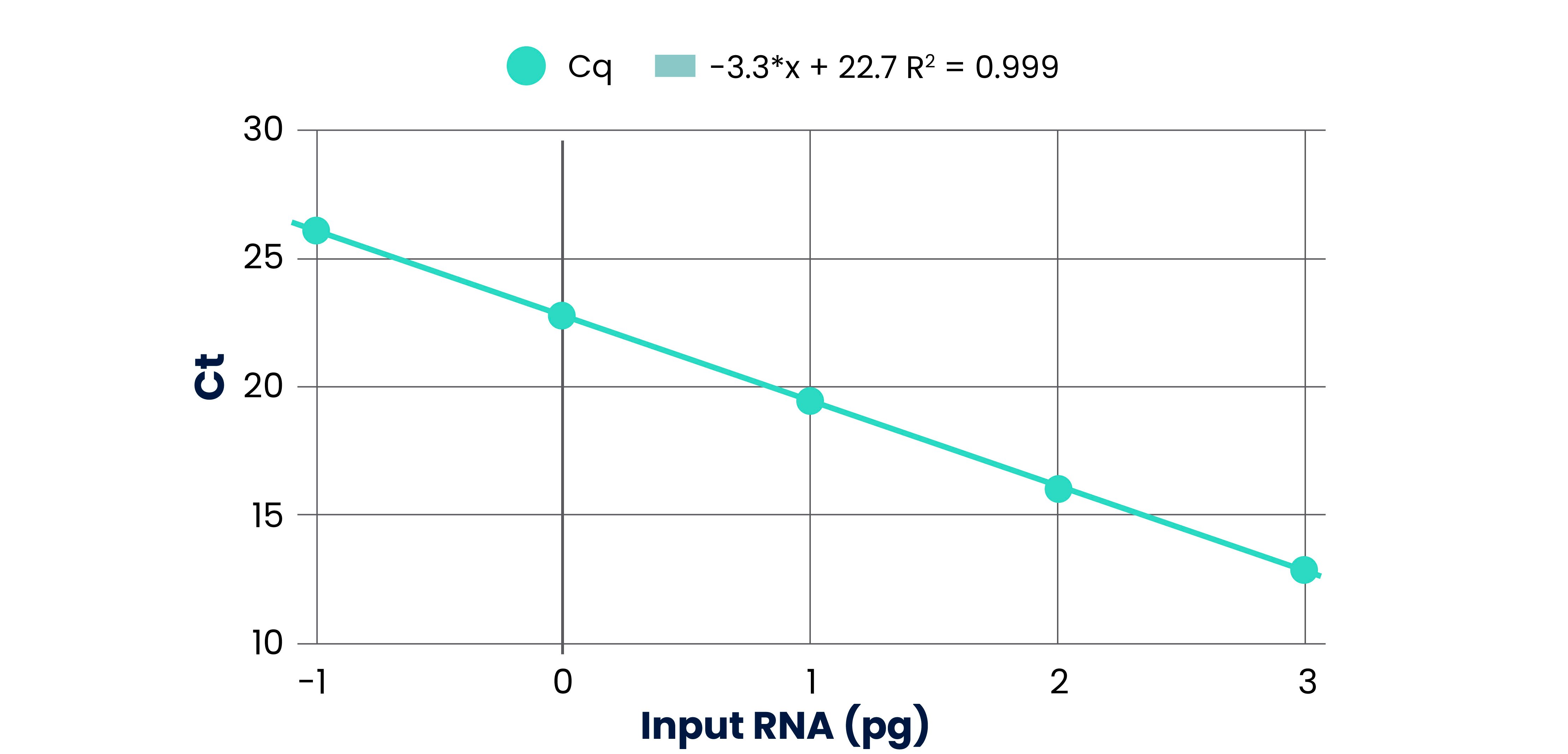
Figure 1. Evaluation of the One-Step RT-qPCR kit demonstrates amplification efficiency and reproducible performance. RT-qPCR targeting Listeria spp. was performed using the One-Step RT-qPCR Kit with five input RNA concentrations (0.1–1000 pg; 3 technical replicates per input). Reactions were performed according to the recommended protocol (A) Amplification plots show robust amplification across the entire RNA input range with minimal variation between technical replicates, demonstrating high assay reproducibility. (B) Mean Ct values, Ct standard deviations(Ct SD), endpoint fluorescence (RFU), and RFU standard deviations(RFU SD) for each input concentration. Low Ct variability and consistent fluorescence signals across the dilution series indicate high assay precision. (C) Standard curve generated from the mean Ct values demonstrates linearity over five orders of magnitude (R² = 0.999), with a calculated PCR efficiency of 100.8%, supporting accurate quantitative detection across the tested input range.
The kit provides consistent, high-performance amplification of major aquaculture viruses, guaranteeing precise and reliable detection
A.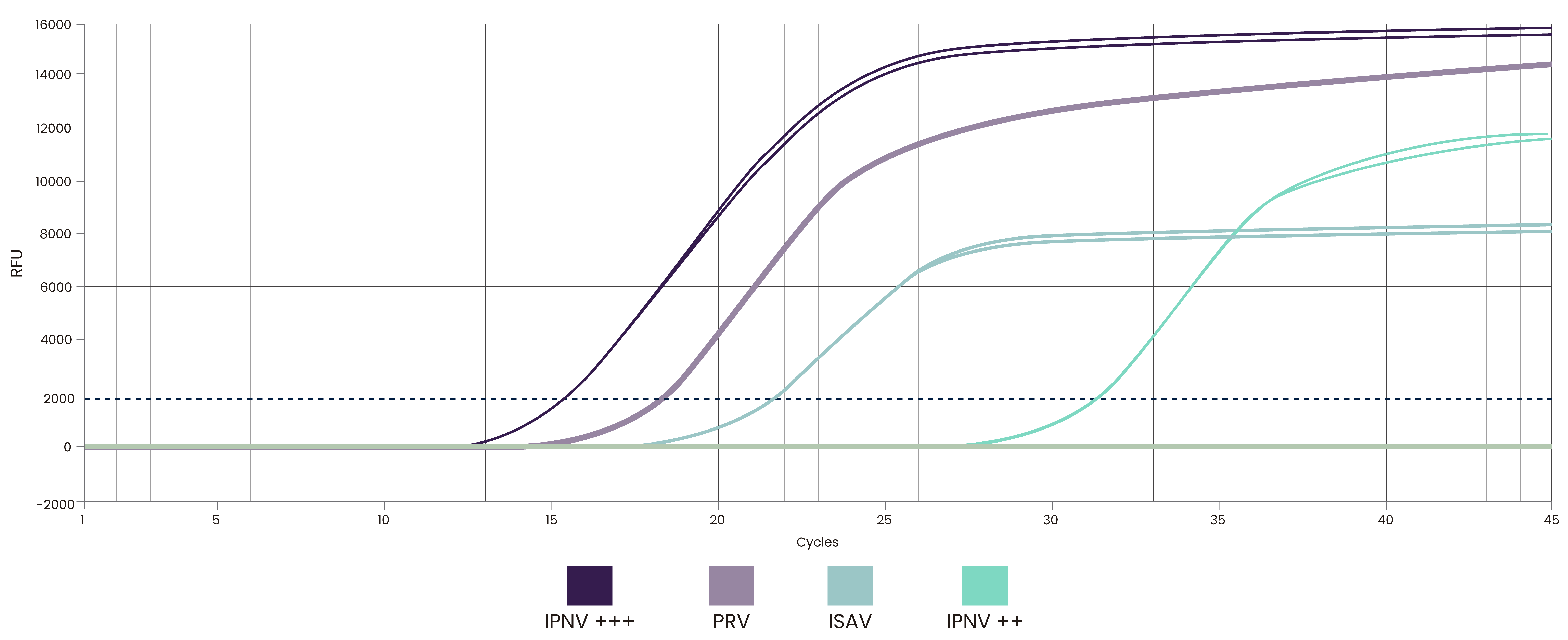
B.
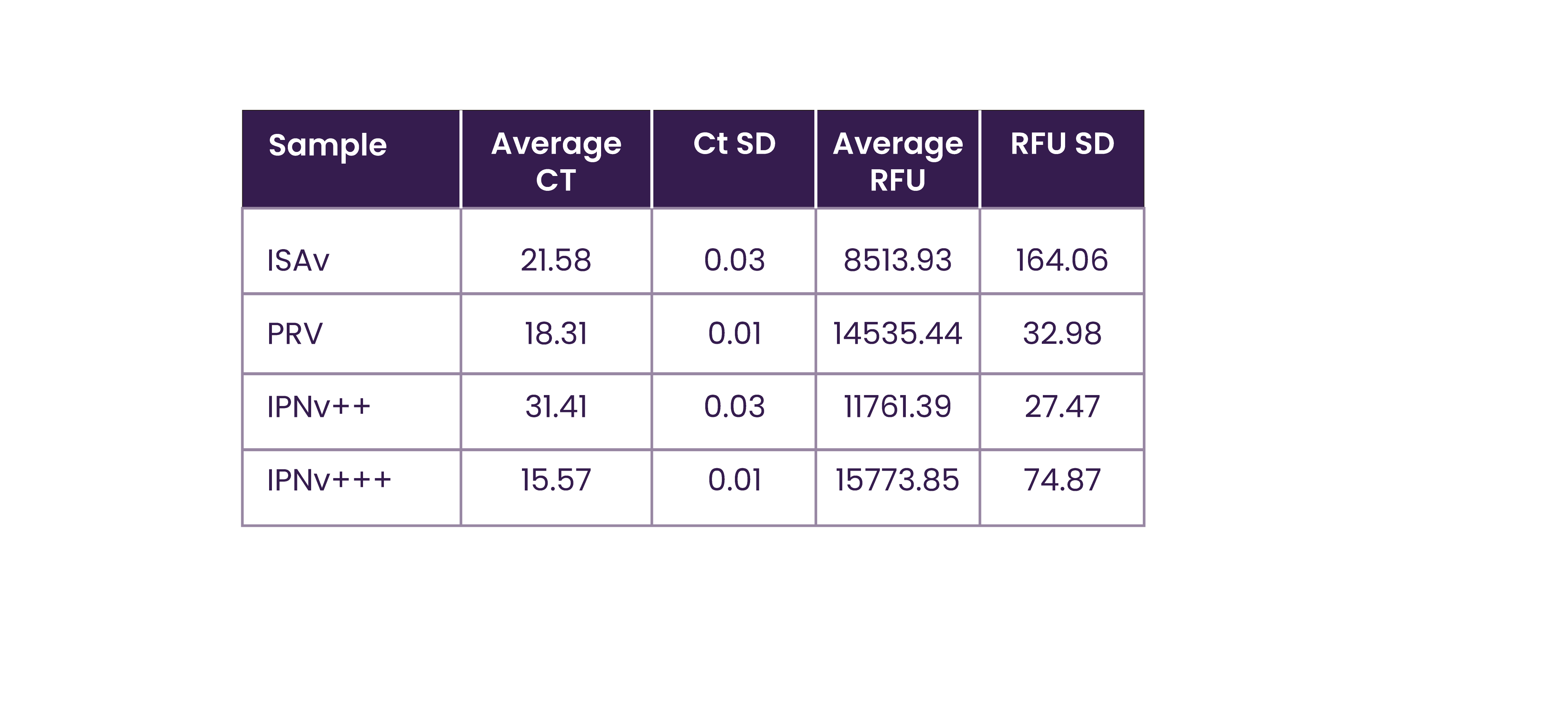
Figure 2. Performance evaluation of the One Step RT-qPCR Kit for key salmonid viral pathogen detection. The One Step RT-qPCR Kit demonstrates amplification of major salmonid viruses, including Infectious Salmon Anemia Virus (ISAV), Piscine Orthoreovirus (PRV), and Infectious Pancreatic Necrosis Virus (IPNV) at medium (IPNV++) and high (IPNV+++) viral loads. (A) Representative amplification curves exhibit the expected sigmoidal profiles for all viral targets, confirming reliable detection across different viral targets. (B) The summary table shows mean Ct values ranging from 15.57 to 31.41 with low Ct standard deviations(Ct SD).
Achieve faster, more sensitive results. The One Step RT-qPCR Kit consistently detects viral targets 5.6 to 6.8 cycles earlier than the competition.
Amplification Plot One Step RT-qPCR kit

KAPA PROBE FAST One-Step qRT-PCR Master Mix

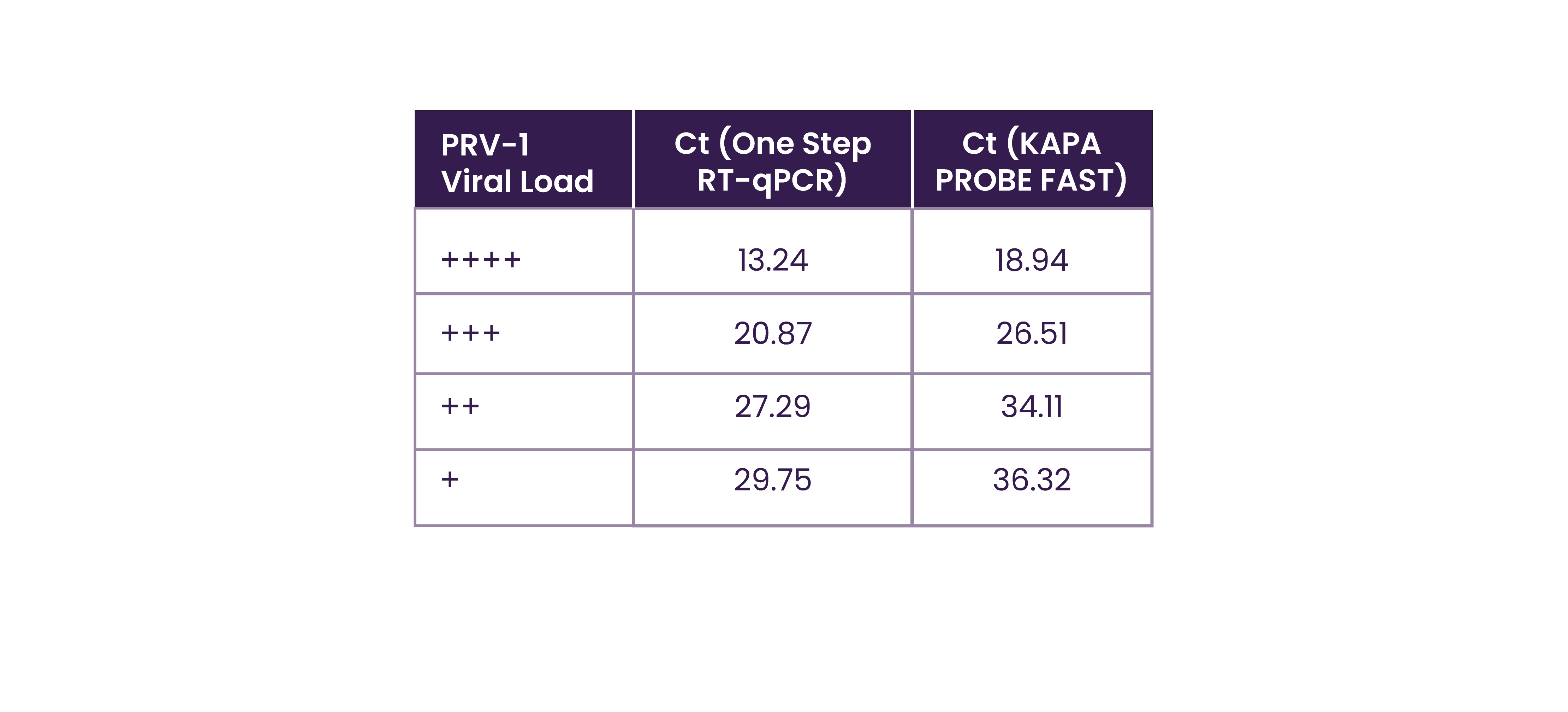
Figure 4. Performance comparison of the One Step RT-qPCR Kit and KAPA PROBE FAST One-Step for the detection of Piscine orthoreovirus-1 (PRV-1) across different viral loads. Across four relative viral loads (high ++++, medium-high +++, medium-low ++, and low +), the One Step RT-qPCR Kit (top) demonstrated enhanced performance, detecting viral targets 5.6 to 6.8 cycles earlier (Ct) than KAPA PROBE FAST One-Step (bottom) across all concentration ranges, while maintaining strong fluorescence signals (ΔRn, ROX-normalized and baseline-corrected).
APPLICATIONS

For workflows focused on RNA target detection or quantification using real-time RT-PCR in a one-step format.
APPLICATIONS

For workflows focused on detecting RNA targets associated with animal pathogens.

For molecular monitoring workflows that enable the detection and analysis of target RNA molecules in research samples or surveillance programs.
For outbreak-related investigation workflows where RT-qPCR helps evaluate RNA targets within a validated assay.
APPLICATIONS
For workflows focused on monitoring RNA targets associated with microorganisms relevant to food safety research.
For the evaluation of contamination patterns or potential sources, when the assay has been validated for the intended context.
For environmental or facility monitoring programs where RNA-based targets are part of the molecular testing strategy.