




Rima™ One-Step RT-qPCR Kit
A sensitive, highly specific RT-qPCR kit designed for rapid reverse transcription and cDNA amplification across a wide range of template inputs in a single step.
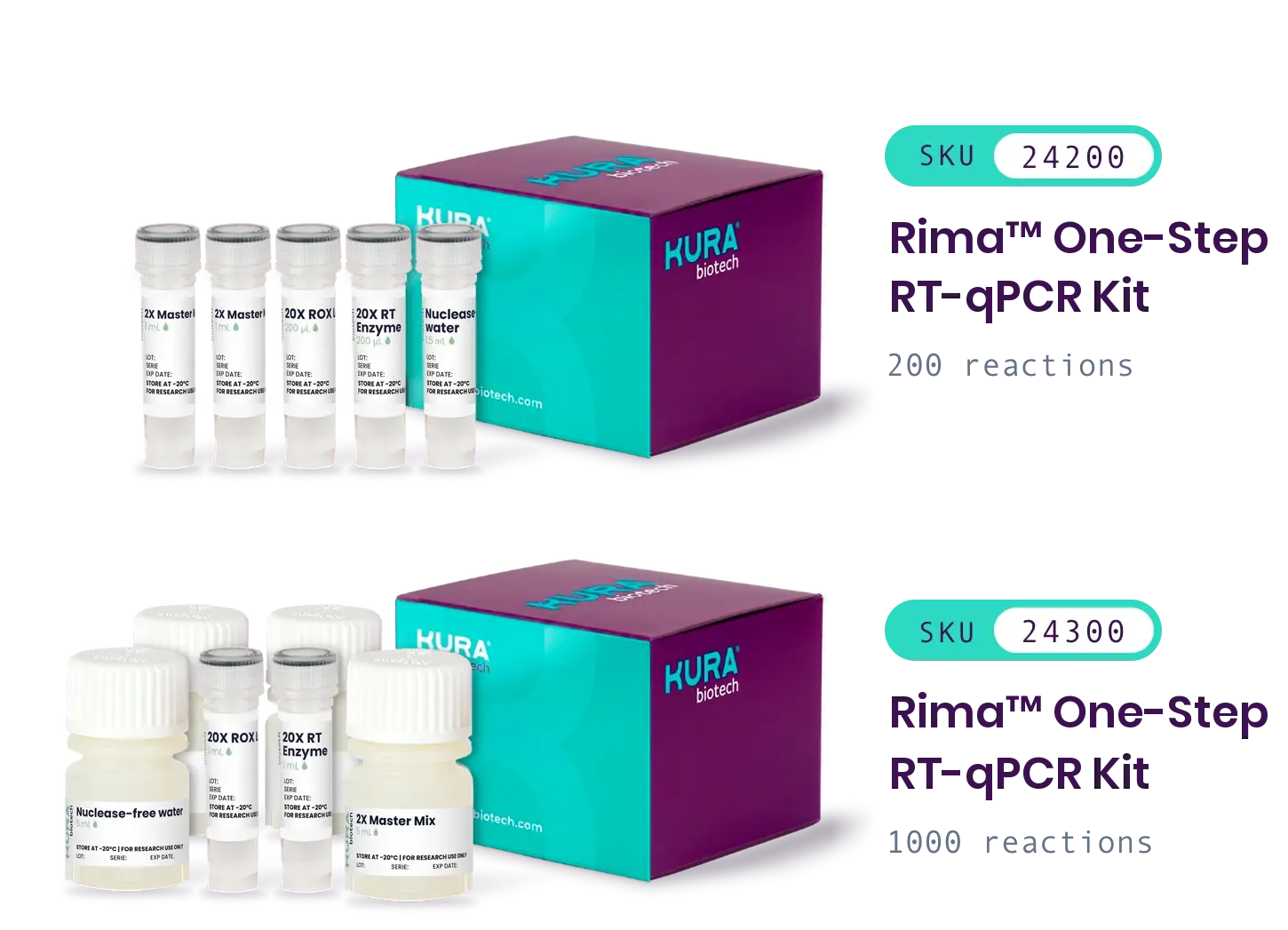
Optimized for efficient RNA detection and quantification
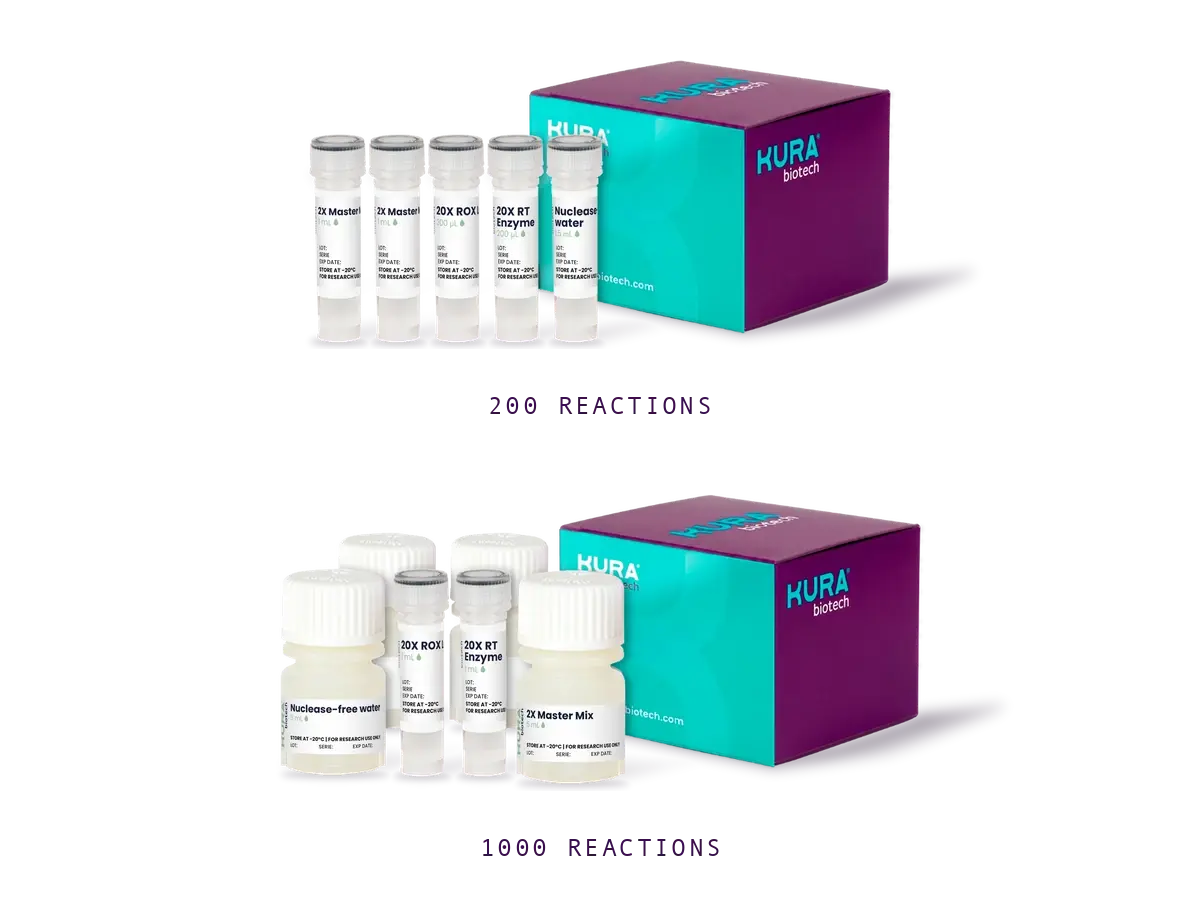
One-Step RT-qPCR Kit
A flexible kit format with the Reverse Transcriptase enzyme in a 20X Mix and the 2X qPCR MasterMix supplied separately, which contains a HotStart Taq DNA polymerase, dNTPs, and enhancers in an optimized buffer.
Sensitive, reproducible RNA quantification
Experimental data showing amplification efficiency across RNA inputs, detection of viral targets, and earlier detection versus a competitor kit.
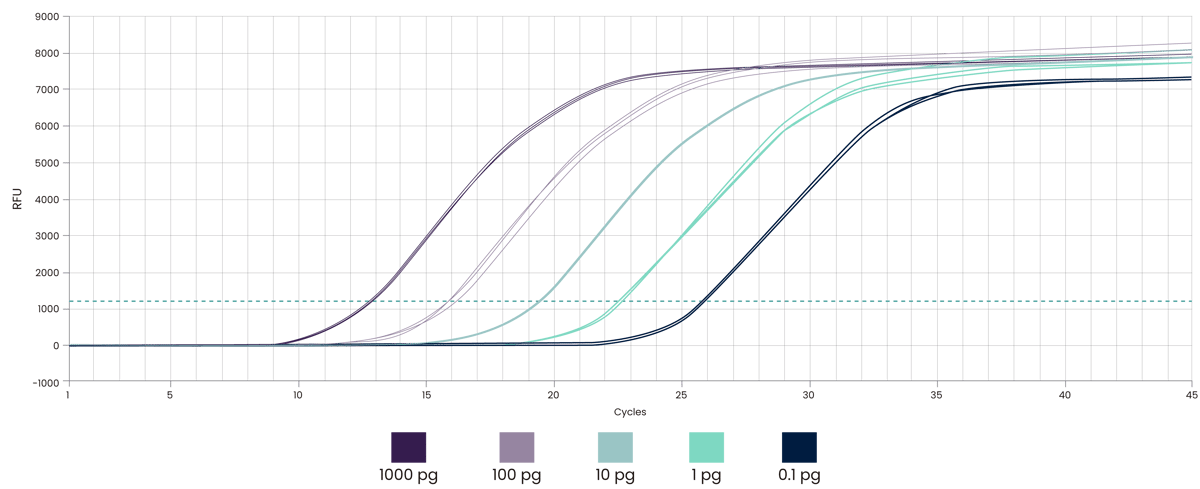
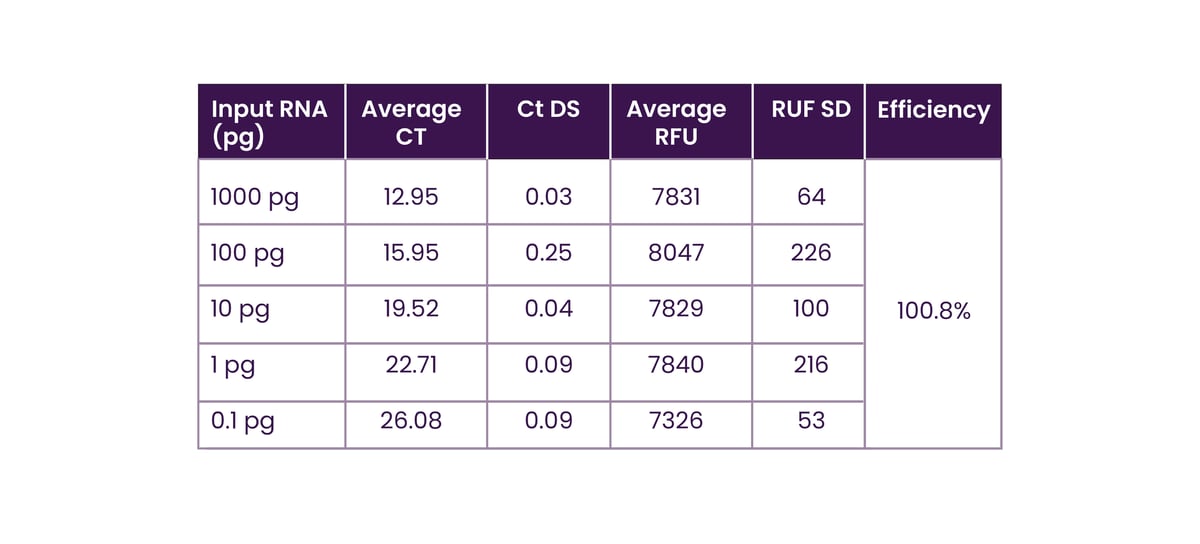
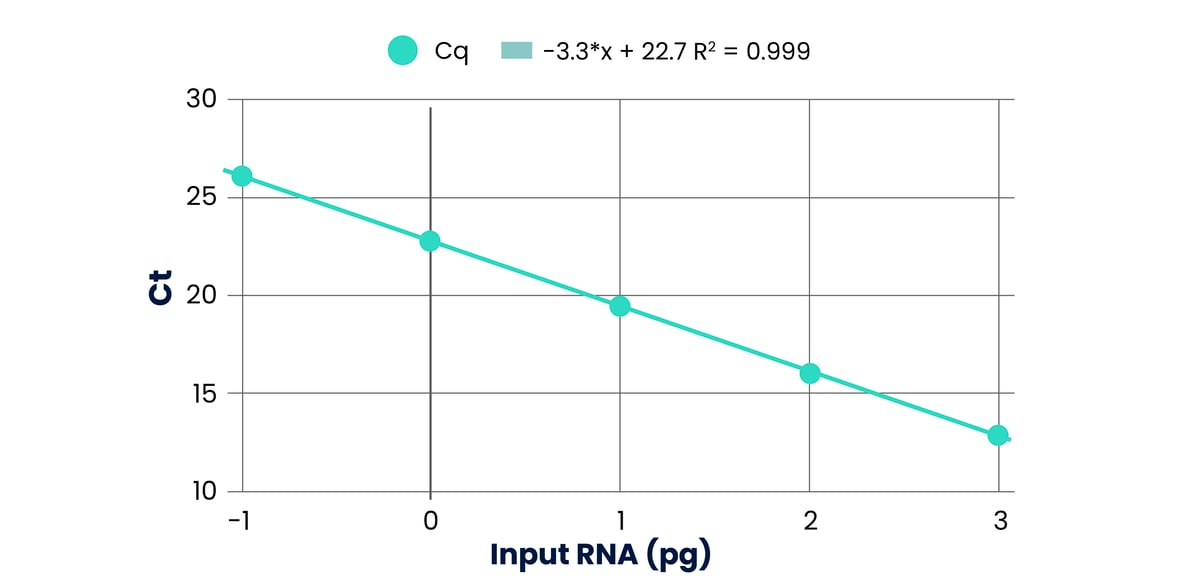
Figure 1. Evaluation of Rima™ One-Step RT-qPCR Kit demonstrates amplification efficiency and reproducible performance. RT-qPCR targeting Listeria spp. was performed using Rima™ One-Step RT-qPCR Kit with five input RNA concentrations (0.1–1000 pg; 3 technical replicates per input). Reactions were performed according to the recommended protocol. (A) Amplification plots show robust amplification across the entire RNA input range with minimal variation between technical replicates, demonstrating high assay reproducibility. (B) Mean Ct values, Ct standard deviations (Ct SD), endpoint fluorescence (RFU), and RFU standard deviations (RFU SD) for each input concentration. Low Ct variability and consistent fluorescence signals across the dilution series indicate high assay precision. (C) Standard curve generated from the mean Ct values demonstrates linearity over five orders of magnitude (R² = 0.999), with a calculated PCR efficiency of 100.8%, supporting accurate quantitative detection across the tested input range.
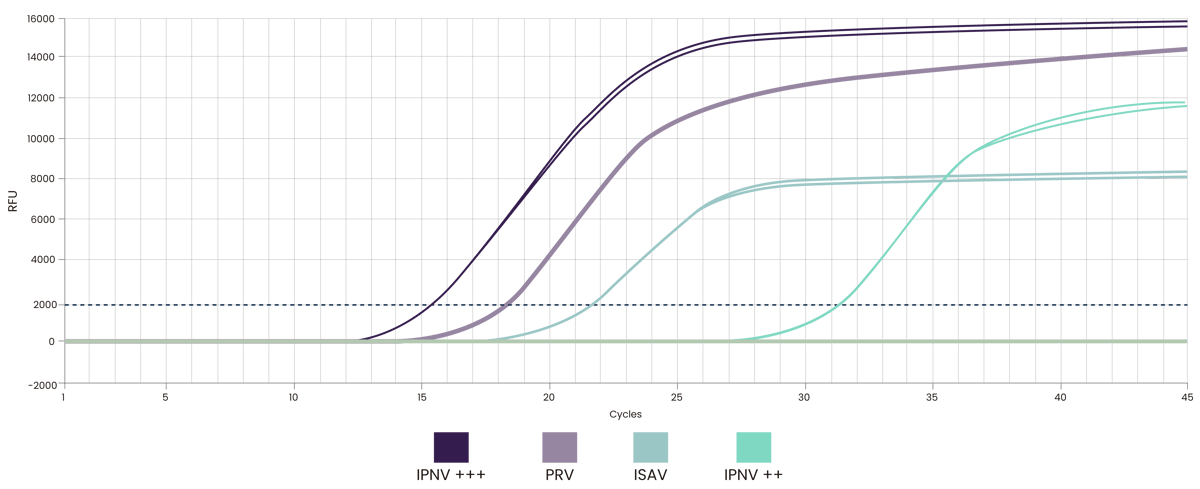
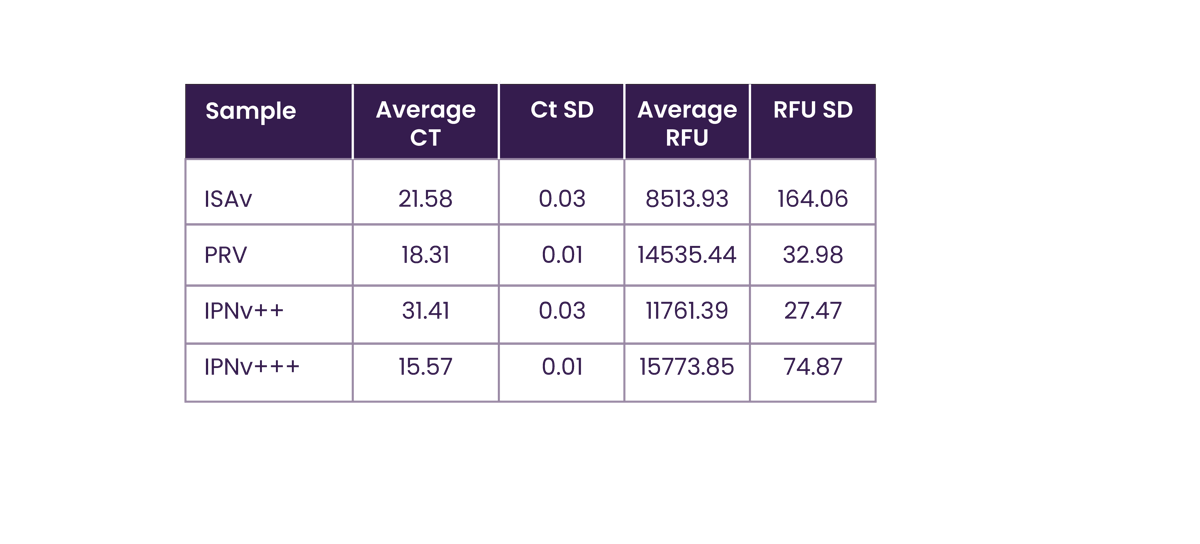
Figure 2. Performance evaluation of Rima™ One-Step RT-qPCR Kit for key salmonid viral pathogen detection. Rima™ One-Step RT-qPCR Kit demonstrates amplification of major salmonid viruses, including Infectious Salmon Anemia Virus (ISAV), Piscine Orthoreovirus (PRV), and Infectious Pancreatic Necrosis Virus (IPNV) at medium (IPNV++) and high (IPNV+++) viral loads. (A) Representative amplification curves exhibit the expected sigmoidal profiles for all viral targets, confirming reliable detection across different viral targets. (B) The summary table shows mean Ct values ranging from 15.57 to 31.41 with low Ct standard deviations (Ct SD).
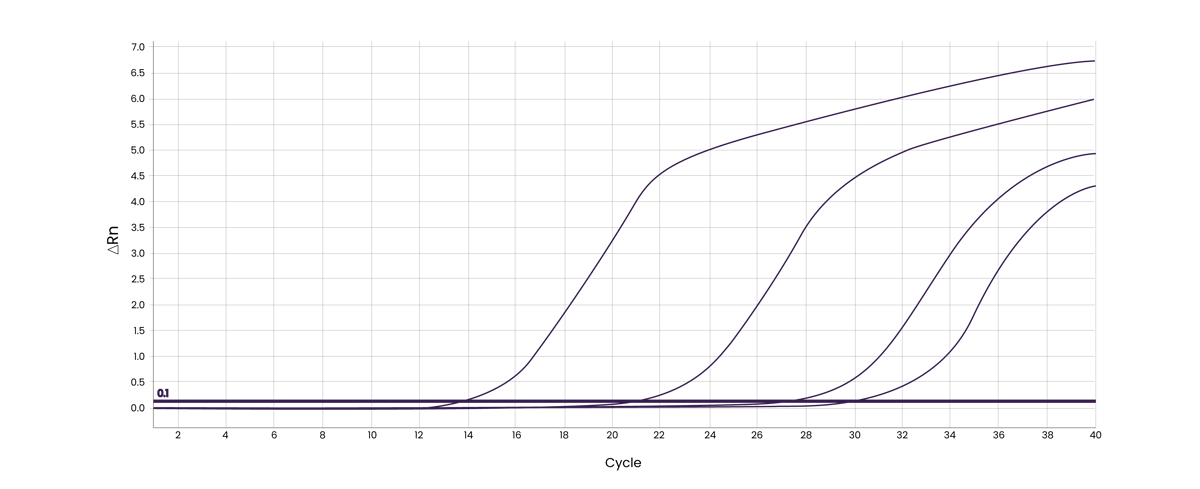
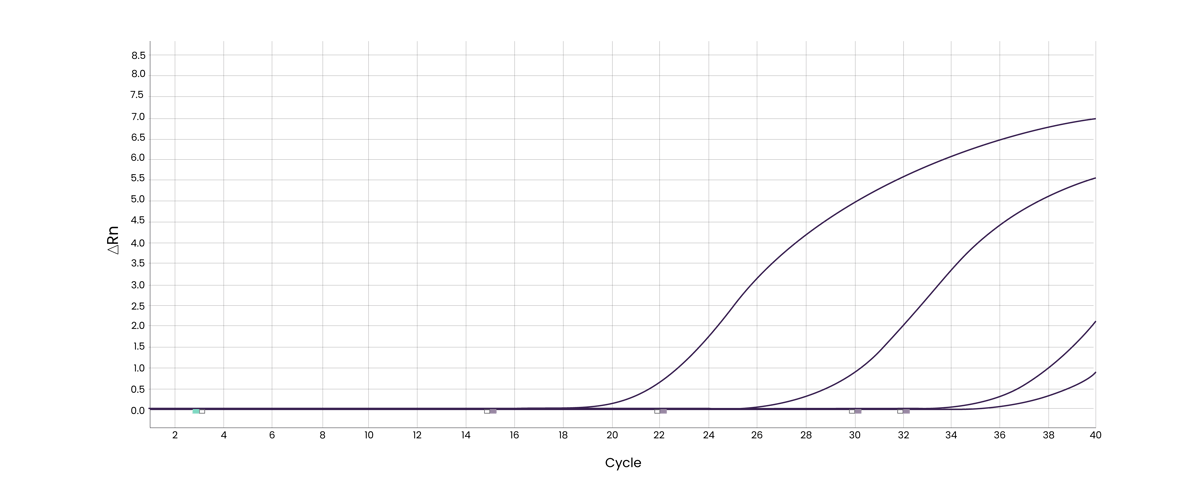
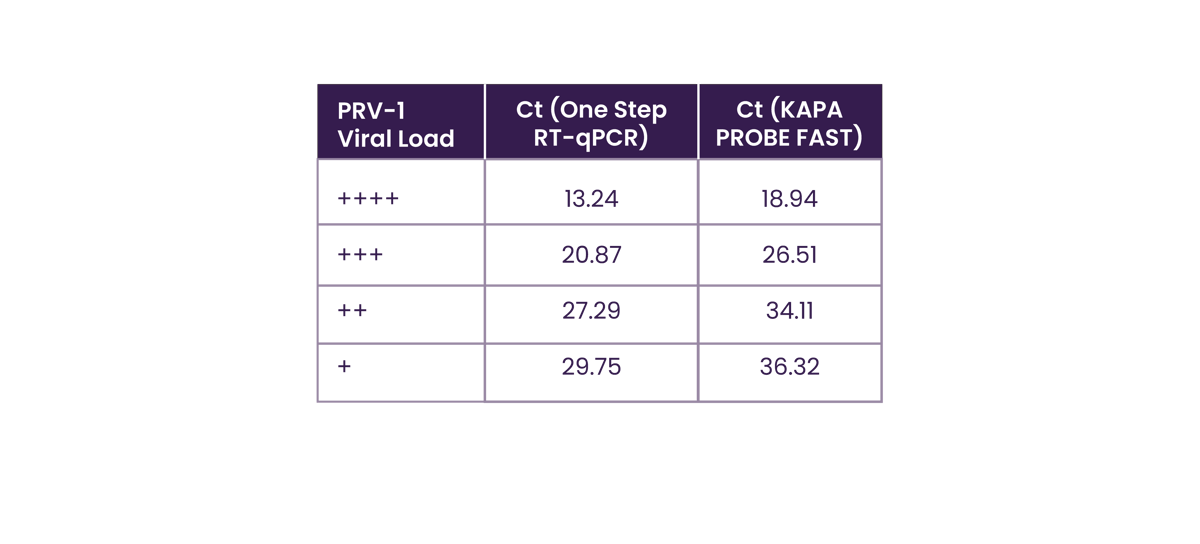
Figure 3. Performance comparison of Rima™ One-Step RT-qPCR Kit and KAPA PROBE FAST One-Step for the detection of Piscine orthoreovirus-1 (PRV-1) across different viral loads. Across four relative viral loads (high ++++, medium-high +++, medium-low ++, and low +), Rima™ One-Step RT-qPCR Kit (top) demonstrated enhanced performance, detecting viral targets 5.6 to 6.8 cycles earlier (Ct) than KAPA PROBE FAST One-Step (bottom) across all concentration ranges, while maintaining strong fluorescence signals (ΔRn, ROX-normalized and baseline-corrected).
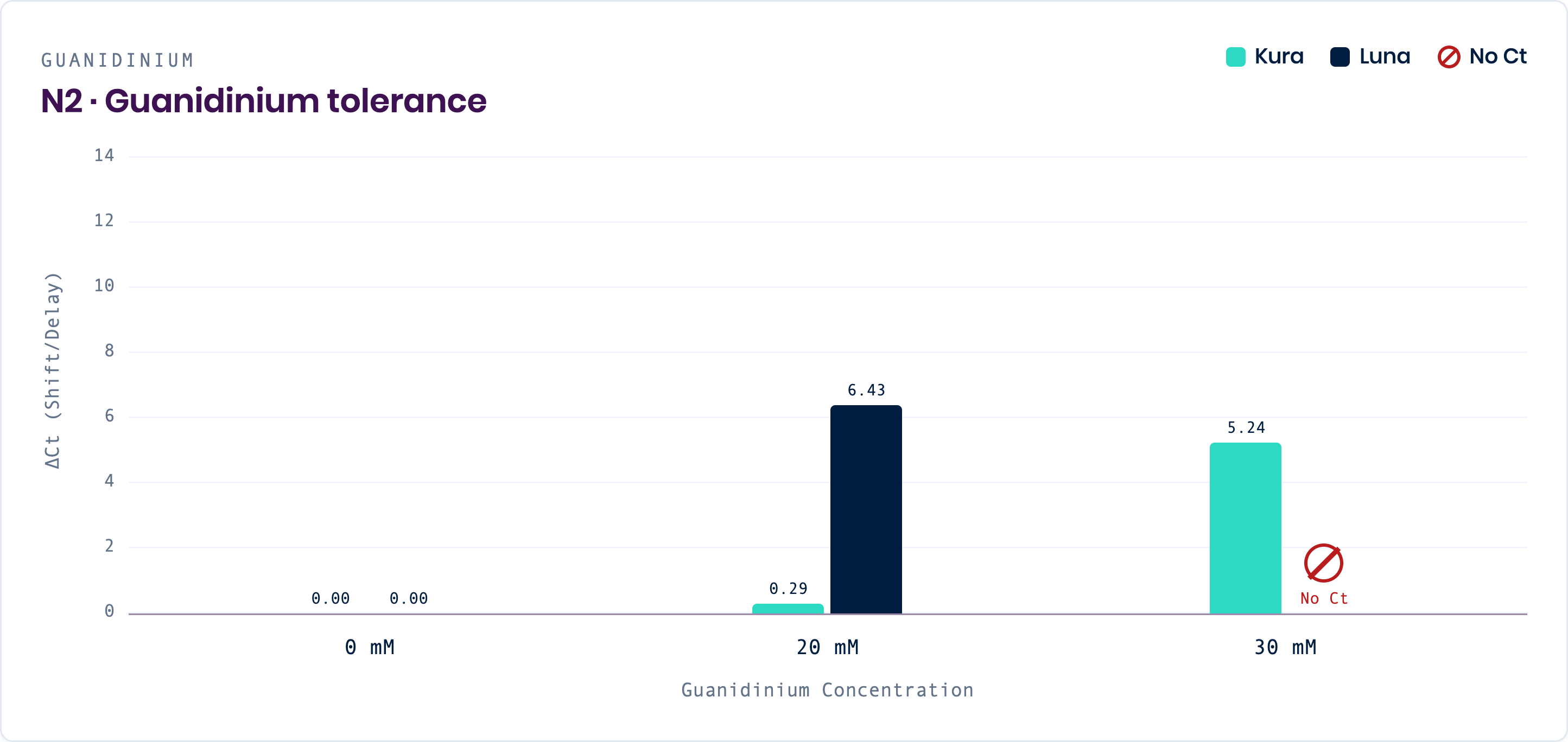
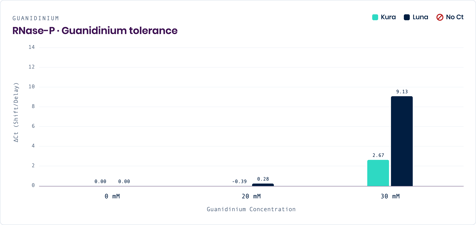
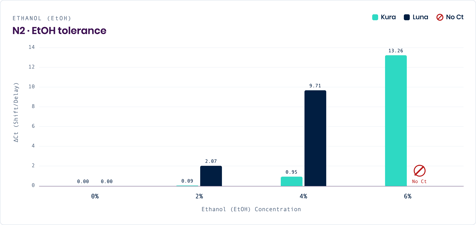
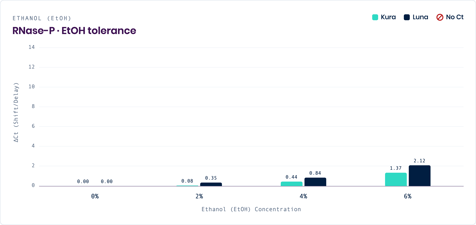
Figure 4. Superior resistance to inhibitors: guanidinium and ethanol tolerance in multiplex RT-qPCR. Duplex RT-qPCR assays simultaneously detecting the SARS-CoV-2 viral gene (N2) and a human target (RNase-P) were performed to evaluate performance against common extraction carryover contaminants. ΔCt values represent the amplification delay calculated for each kit against its own baseline without inhibitor (ΔCt = Ct inhibitor − Ct control). (A) Guanidinium: Rima™ One-Step RT-qPCR Kit maintains efficient, robust amplification even at a critical concentration of 30 mM (ΔCt = 5.24 in N2 and 2.67 in RNase-P), unlike Luna, which shows premature inhibition at 20 mM (ΔCt = 6.43 in N2). (B) Ethanol: Rima™ One-Step RT-qPCR Kit shows outstanding tolerance to EtOH carryover, keeping viral detection intact up to 4% EtOH (ΔCt = 0.95) and detectable at 6% EtOH (ΔCt = 13.26), in sharp contrast to Luna, which shows marked inhibition from 2% EtOH (ΔCt = 2.07) and complete viral detection failure (No Ct) from 6% EtOH onward. These results establish Rima™ One-Step RT-qPCR Kit as the most reliable and inhibitor-resistant solution for complex samples containing purification carryover.

Ready to evaluate Kura Biotech’s Rima™ One-Step RT-qPCR Kit?
Request product information or connect with our team here.